Foundation repair
Stabilizing and correcting foundations that have moved because of expansive clay, poor drainage, or settling caliche. The starting point for most homes with cracks or sloping floors.
Rio Rancho Foundation Pros
Straight answers about foundation movement on Rio Rancho's clay, caliche, and sandy soils — from inspection to repair.
Serving Rio Rancho, NM and the surrounding area.
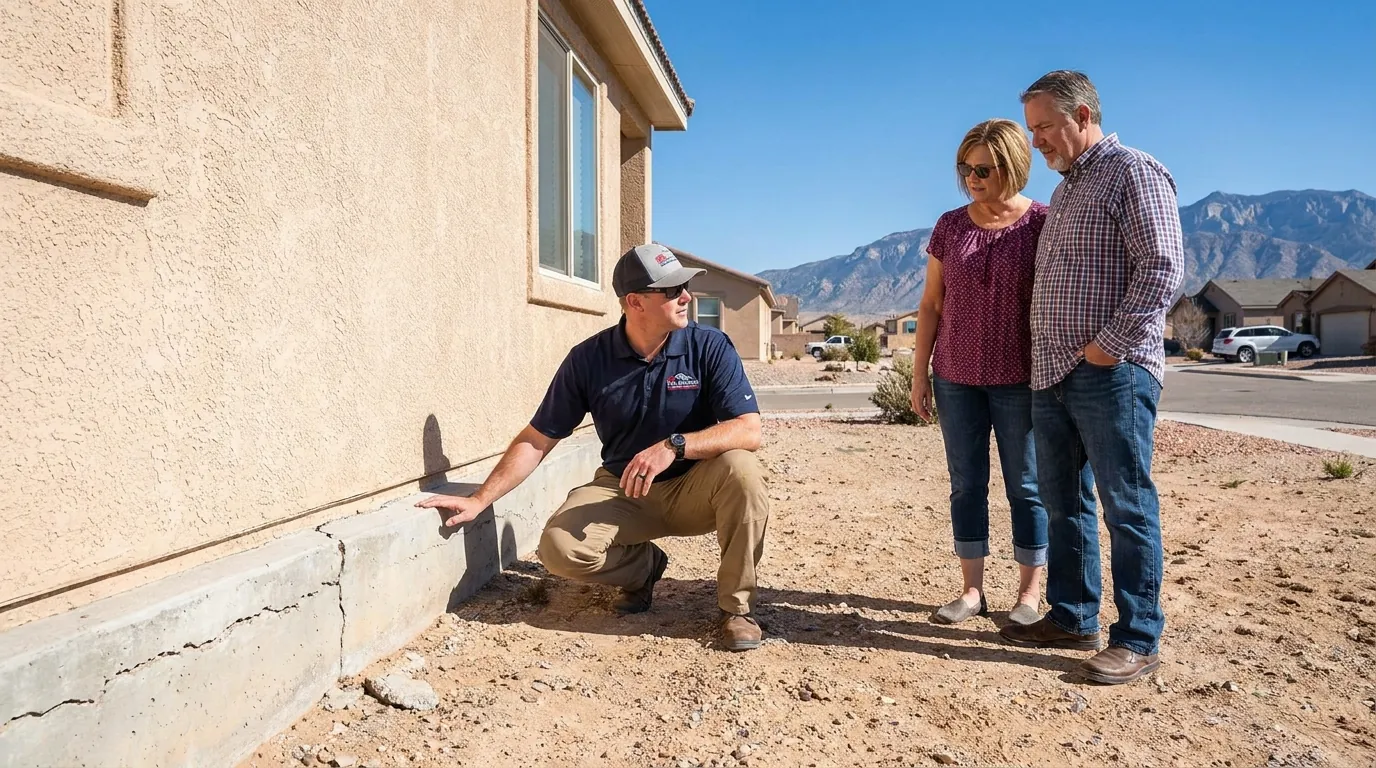
If your doors have started sticking, a crack has crept up a wall, or a corner of your slab feels like it has dropped, you are dealing with the single most common structural problem in this part of New Mexico: soil that moves. Rio Rancho sits on a mix of expansive clay, hard caliche layers, and loose windblown sand. That combination reacts strongly to our long dry spells and short, intense monsoon bursts, and foundations are what pay the price when the ground under them swells and shrinks.
Rio Rancho Foundation Pros focuses on this one problem for homeowners across Rio Rancho and the surrounding communities. Whether you own a slab-on-grade house on the West Mesa, an older pier-and-beam home near the river, or something in between, the goal is the same: figure out what the soil is doing, stabilize the structure, and keep water from making it worse. This site explains how that work is done, what warning signs matter, and how to decide what to do next — in plain language, without pressure.
The work starts with an honest look. A foundation inspection tells you whether what you are seeing is cosmetic settling or active movement that needs attention. From there, the right fix depends on how your home is built and what the ground beneath it is doing. Read on, or reach out whenever you are ready to talk through your situation.
Foundation movement here is almost always a water story. The clays in and around Rio Rancho are expansive: they take on water and swell during monsoon season, then give it up and shrink through the long arid stretches the rest of the year. That cycle pushes a foundation up in one season and lets it drop in another. Over years, the repeated flexing opens cracks, tilts slabs, and separates trim and brick.
Caliche adds its own twist. This cemented, rock-hard layer sits at shifting depths across the area. Where it is close to the surface, it can be stronger than the soil above it, so water gets trapped and channeled in ways that concentrate movement under one part of a house. Loose sand, meanwhile, drains fast but erodes and washes out when monsoon runoff is not controlled — which is why so many repairs here start with fixing where the water goes before touching the structure itself.
Season matters, too. The heaviest movement tends to show up during the July–September monsoon and again at the peak of the dry season, when the ground has pulled the most moisture out from under the edges of a slab. Because the cause is moisture swing, the most durable fixes pair structural work — piers, leveling, added support — with drainage correction that keeps soil moisture steadier year-round. A repair that ignores the water usually comes back.
Every service below is grounded in how local soil and water behave. Start with an inspection if you are not sure which one you need.
Stabilizing and correcting foundations that have moved because of expansive clay, poor drainage, or settling caliche. The starting point for most homes with cracks or sloping floors.
Re-supporting and leveling homes built on piers and beams, common in older Corrales and near-river neighborhoods where crawl spaces sit over shifting soil.
Addressing cracks, heave, and settlement in slab-on-grade homes, the dominant construction style across newer Rio Rancho subdivisions.
Fixing the grading, downspouts, and water paths that let monsoon runoff pool against a foundation — often the root cause behind repeated movement.
Adding or replacing supports under a raised floor system to stop sagging, bouncing floors and to hold levels stable over dry-season soil shrinkage.
A measured, documented look at what your foundation is doing and why, so you can make a decision based on facts instead of guesswork.
Practical answers to the questions we hear most in Rio Rancho, NM.
What drives the cost to repair a foundation in Rio Rancho, from crack sealing to full pier installs, plus the local soil factors that change the price.
Expansive clay soil is the leading cause of foundation cracks in Rio Rancho. Here is how the wet-dry cycle moves your house and what to watch for.
Learn the warning signs of foundation movement in Rio Rancho, from diagonal cracks to sticking doors, and when the symptoms mean it is time to act.
If you have noticed cracks, sticking doors, or uneven floors, an inspection is the low-risk first step. Reach out to describe what you are seeing and we will walk you through what it likely means and what your options are.
Serving Rio Rancho and surrounding communities.
Rio Rancho Foundation Pros works with homeowners in Rio Rancho and nearby communities, each with its own soil and housing patterns.
Hairline cracks in stucco or drywall are common and often cosmetic, but cracks wider than about a quarter inch, cracks that keep growing, doors that stick seasonally, and sloping floors point to active movement. A foundation inspection measures elevation across the home so you can tell the difference with data rather than a guess.
The main driver is expansive clay soil that swells when it takes on water during monsoon season and shrinks as it dries out through the arid months. That repeated swelling and shrinking lifts and drops parts of a foundation over time, which is why so many local homes develop cracks and uneven floors.
Yes. Newer Rio Rancho subdivisions are mostly slab-on-grade, while older homes near the river and in Corrales are often pier and beam. The repair approach differs between them, so the first step is identifying how your home is built and what the soil under it is doing.
Often, yes. Because local foundation movement is driven by moisture swings in the soil, controlling where monsoon runoff goes and keeping soil moisture steadier can slow or stop further movement. Many durable repairs combine structural work with drainage correction for that reason.
It depends on the cause, how far the movement has progressed, the size and construction of the home, and how much drainage work is involved. No honest number can be given without seeing the home, which is why an inspection comes first.