Cracks in floor tile or concrete
A crack running across tile or through the slab surface, especially in a line, often reflects the slab flexing underneath.
Slab foundation repair in Rio Rancho for concrete slabs cracked or heaved by expansive clay and monsoon moisture. See the signs, the process, and next steps.
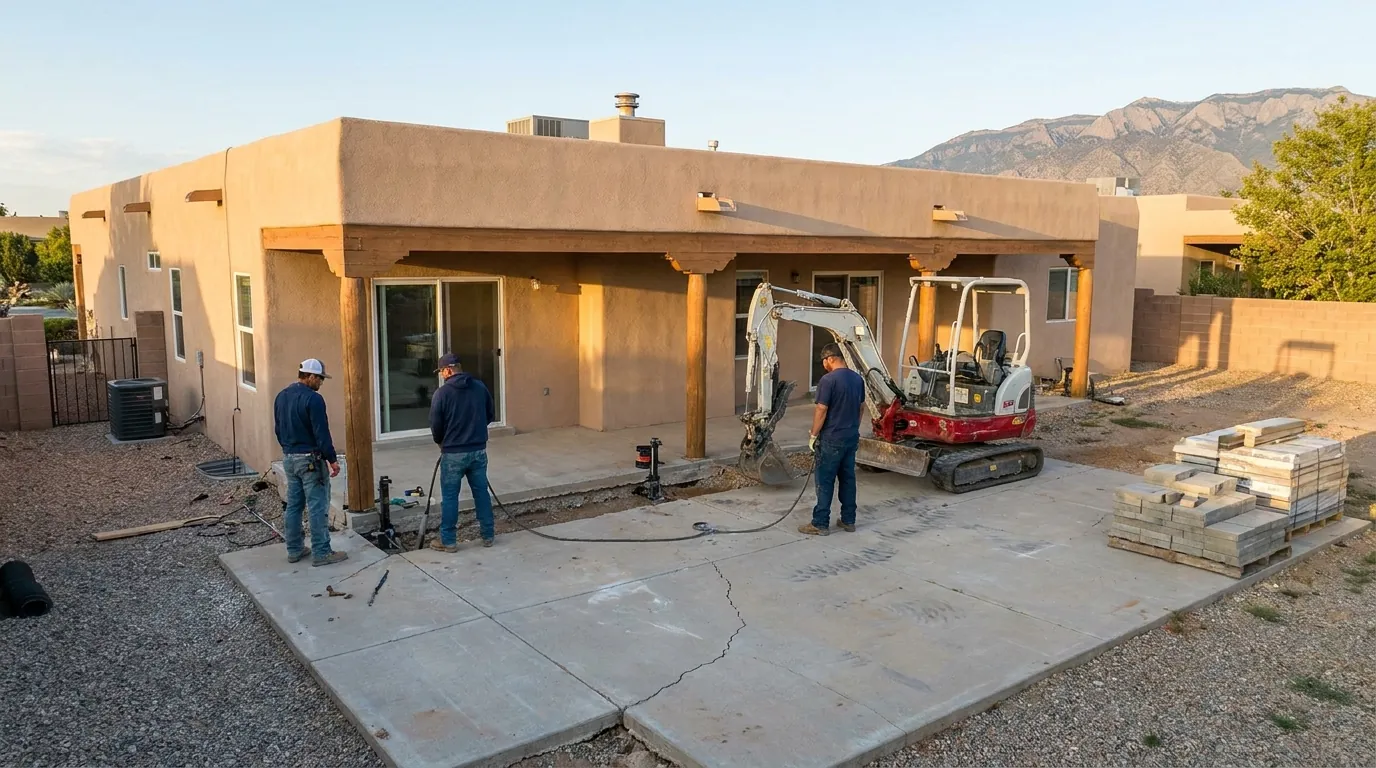
Most newer homes in Rio Rancho are built on a concrete slab poured directly on the ground. When the soil under that slab moves, the concrete has little room to flex, so it cracks and the floors above it go out of level. Because the living space sits right on the slab, the symptoms often show up first as cracks in floor tile, doors that no longer latch, and separations along interior walls.
Slab movement here is usually about water. Expansive clay beneath the slab swells during monsoon season and shrinks through the dry months, lifting and dropping sections of concrete. Over repeated cycles, that differential movement stresses the slab until it cracks and settles unevenly.
Slab foundation repair stabilizes the concrete and, where possible, lifts settled areas back toward level. Because there is no crawl space, the work happens below or through the slab, which makes accurate diagnosis important. This page is part of our broader foundation repair service; if you are still identifying the problem, begin with a foundation inspection.
On a slab home, watch for these indicators of movement below the concrete.
A crack running across tile or through the slab surface, especially in a line, often reflects the slab flexing underneath.
Diagonal cracks from door and window corners appear as the slab tilts and the walls above rack out of square.
When the slab moves, frames shift, and doors bind or swing open on their own.
A baseboard pulling away from the floor, or a visible gap under it, signals that part of the slab has dropped.
A floor that noticeably slopes or has a high spot points to differential movement in the slab.
Cracks that open in the dry season and partly close after rain reflect the clay swelling and shrinking below.
Repairing a slab focuses on restoring support and controlling the moisture that moved it.
We survey floor elevations across the home to identify settled and heaved zones and the direction of movement.
We assess drainage, plumbing leaks, and soil moisture, since a slab that settled from a leak needs a different fix than one moving with the seasons.
Where the slab has settled, support piers are placed beneath it and driven to firmer bearing below the reactive clay.
Settled sections are raised carefully toward their original position and stabilized, closing many cracks in the process.
To keep the slab stable, we address grading and runoff, often pairing the repair with [drainage correction](/services/drainage-correction/).
Rio Rancho's ground puts unusual stress on slabs. Expansive clay layers expand and contract dramatically with moisture, while sandy zones and hard caliche create uneven bearing. A single slab can span more than one soil type, so it lifts in one area and settles in another, producing the diagonal cracks and slopes homeowners notice.
The monsoon pattern intensifies this. Heavy summer bursts saturate the clay quickly, then months of arid heat dry it out. That rapid swing is harder on a rigid slab than steady moisture would be, which is why so much slab movement in our area is seasonal rather than gradual.
Because water drives the movement, a slab repair that ignores drainage tends not to last. Keeping soil moisture consistent around and beneath the foundation is central to a durable outcome. If your home is instead built over a crawl space, see pier and beam leveling, which uses a very different method.
Describe where the cracks are and whether they change with the seasons. We can help you understand whether the slab is actively moving and what would stabilize it.
Serving Rio Rancho and nearby communities including Rio Rancho Estates and Albuquerque.
Most slabs can be stabilized and lifted rather than replaced. Underpinning supports the settled areas from below and raises them toward level, which is far less disruptive than tearing out and repouring the concrete.
The expansive clay beneath it swells when monsoon rains saturate the ground and shrinks during dry heat. That repeated wet-dry cycle lifts and drops sections of the slab, opening cracks and sloping floors.
Yes. A leak under a slab can wet the soil in one spot and cause localized movement that mimics soil-driven settling. Part of diagnosis is ruling out plumbing so the real cause is addressed.
The size of the affected area, how many support piers are needed, access around the home, and whether drainage work is included all shape the scope. Because homes and soils differ, the plan is set after measuring actual movement.