Stair-step cracks in block or brick
Diagonal cracks that follow the mortar joints in a stepping pattern signal that one part of the foundation has dropped relative to another.
Foundation repair in Rio Rancho for homes affected by expansive clay soils and monsoon-season moisture swings. Learn the signs, the process, and next steps.
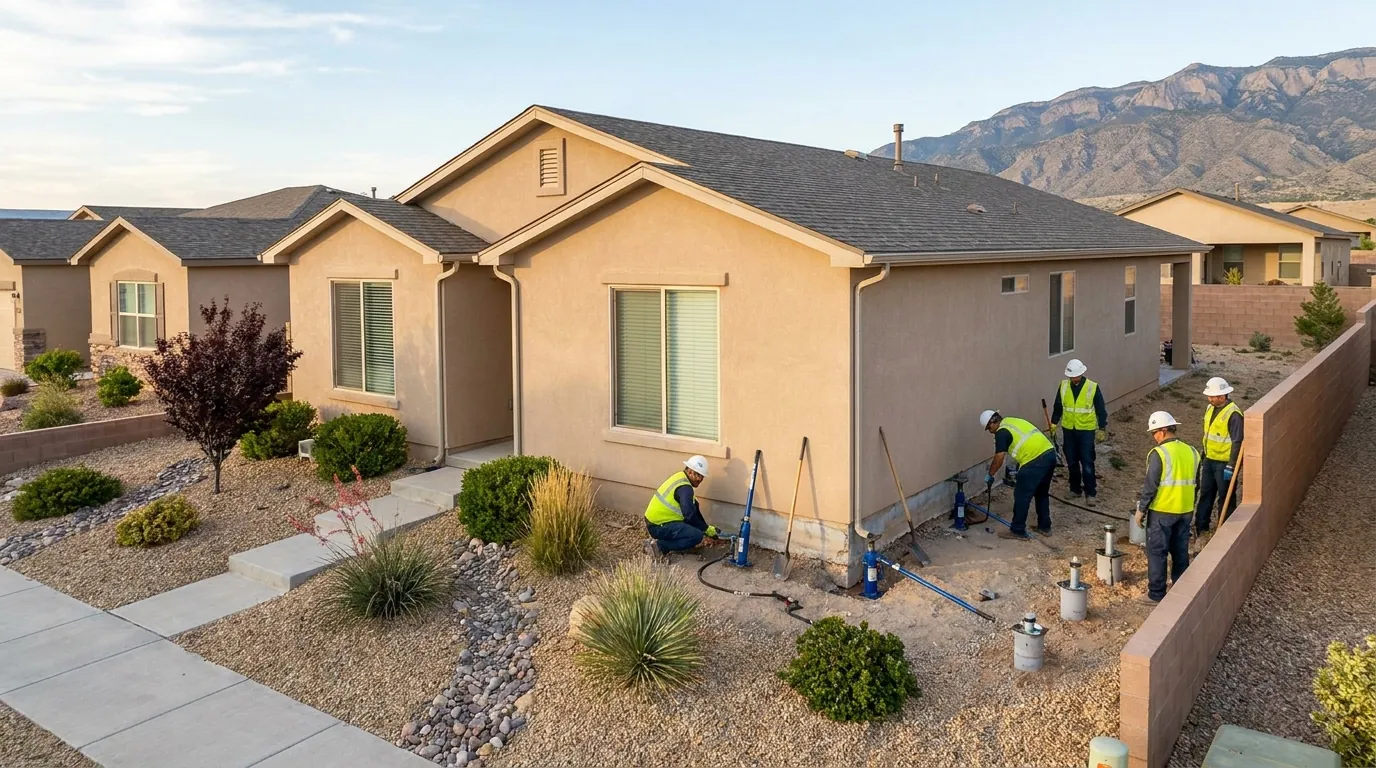
Foundation problems rarely start with a dramatic failure. In Rio Rancho, they build slowly as the ground under the house swells during monsoon bursts and shrinks back during long, arid stretches. Each cycle moves the soil, and the concrete resting on it moves too. Over years, that repeated motion opens cracks, tilts floors, and pulls door frames out of square.
If you are searching to repair a foundation, the first job is understanding what is actually happening beneath your slab or piers. The same crack can mean minor settling in one home and active, ongoing movement in another. What matters is whether the movement has stopped or is still progressing, and how far the structure has already shifted.
This page explains what foundation repair involves in our specific soil conditions, the warning signs worth acting on, and how a homeowner decides what to do next. If you are not sure your problem is structural yet, a foundation inspection is the sensible starting point.
These symptoms tend to appear together as a foundation shifts. One alone may be cosmetic; several usually point to structural movement.
Diagonal cracks that follow the mortar joints in a stepping pattern signal that one part of the foundation has dropped relative to another.
When frames rack out of square, doors catch at the top corner and windows bind. This often worsens seasonally as clay soils swell and shrink.
A floor that dips toward one wall, or a spot that feels bouncy, points to loss of support underneath.
Separations where walls meet ceilings, or baseboards pulling away from the floor, show the structure is flexing.
Hairline cracks are common in concrete. Cracks you can fit a nickel into, especially widening ones, deserve attention.
A visible gap opening between the soil and the foundation edge after a dry spell reflects clay shrinkage pulling away from the structure.
The right method depends on how your home is built and how the soil is behaving. A typical repair follows these stages.
We measure the floor's relative elevations across the home to map where and how much it has moved, and we inspect cracks, drainage, and soil conditions around the perimeter.
Homes on slabs and homes on piers call for different approaches. We match the fix to the structure, whether that means underpinning, adjusting supports, or addressing what caused the movement.
Where settlement is the problem, support piers are driven down past the reactive clay to firmer bearing material so the load no longer rides on shifting soil.
The structure is carefully raised toward its original elevation where practical, then secured so future movement is minimized.
Because moisture swings drive most local movement, we look at grading and runoff and often recommend [drainage correction](/services/drainage-correction/) so the repair holds.
The soils around Rio Rancho combine expansive clay with sandy stretches and hard caliche layers. The clay is the troublemaker: it holds water and expands when wet, then shrinks and pulls away when dry. Our climate feeds that cycle perfectly, with intense monsoon downpours in summer followed by months of arid heat that bake the ground out.
This means foundation movement here is often seasonal and driven by water, not just age. A slab can lift after a wet monsoon and settle again through the dry winter. That is why a durable repair usually pairs structural support with better moisture management around the home. Fixing the crack without fixing the water that caused it invites the problem back.
Caliche adds another wrinkle. It can provide firm bearing in some spots and create uneven support in others, so two houses on the same street may move very differently. Understanding your specific lot is part of a sound repair. If your home sits on piers rather than a slab, see our pier and beam leveling page for how the approach differs.
Send a few photos of the cracks and describe when they appeared. We can talk through whether the movement looks active and what a reasonable next step would be for your home.
Serving Rio Rancho and nearby communities including Corrales and Albuquerque.
Width, direction, and change over time matter most. Hairline vertical cracks are often cosmetic, while diagonal stair-step cracks, cracks wider than a nickel, or cracks that keep growing usually indicate active movement worth inspecting.
A proper repair stabilizes the structure, and pairing it with drainage and moisture control gives the best chance of lasting results. Because our clay soils keep cycling wet and dry, managing water around the home is what keeps a repair holding.
No. Concrete naturally develops minor shrinkage cracks that are cosmetic. The concern is movement, which shows up as cracks combined with sticking doors, sloping floors, or gaps at trim. An inspection sorts cosmetic from structural.
The main factors are how far the home has moved, how many support points are needed, access around the structure, and whether drainage work is included. Every home differs, so the scope is set after measuring the actual movement.
In most cases yes. Foundation stabilization is usually done from the exterior or from a crawl space, so homeowners can typically remain in the home while work proceeds.