Crack patterns
Where cracks run, their width and direction, and whether they are the cosmetic shrinkage type or the diagonal, stair-step pattern of movement.
Foundation inspection in Rio Rancho to tell cosmetic cracks from real movement, measure floor elevations, and plan the right next step for clay-soil homes.
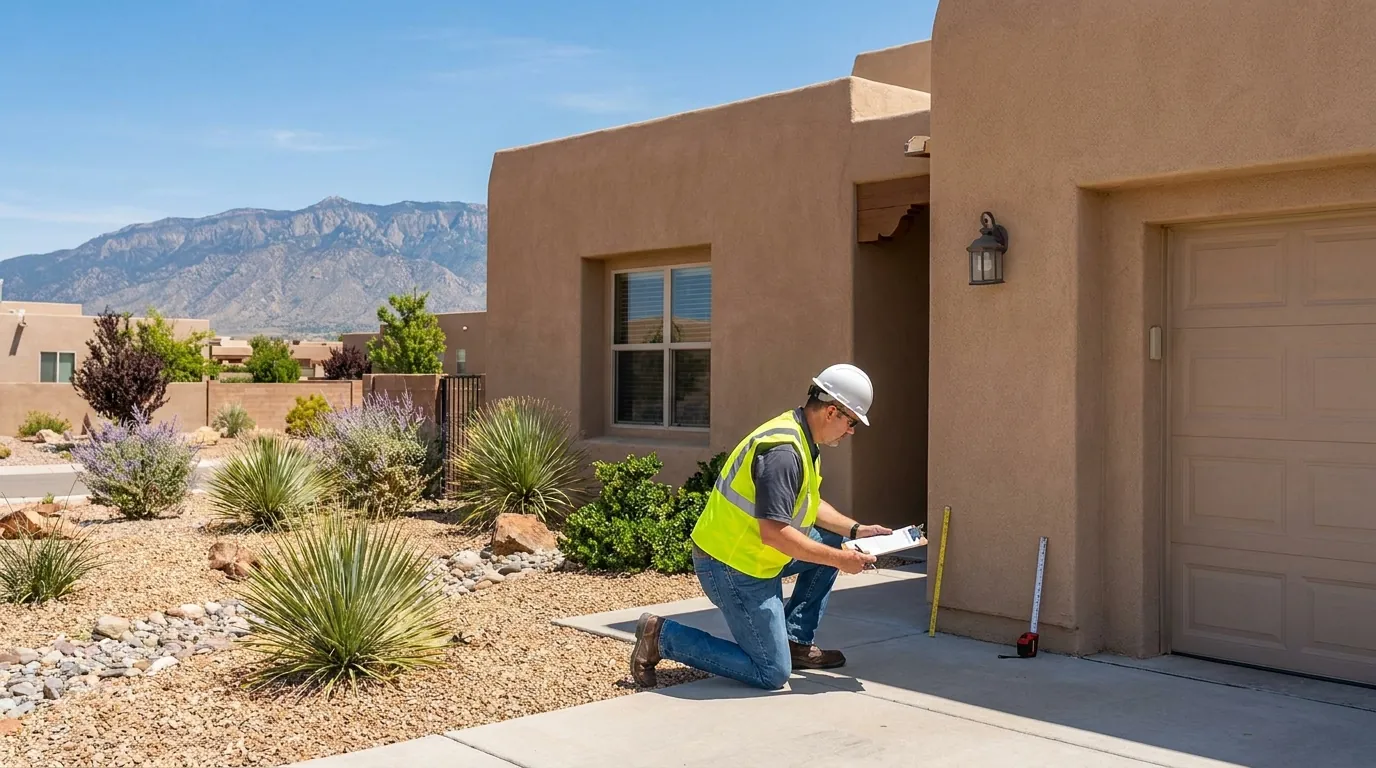
Not every crack means trouble, and not every serious problem shows an obvious crack. A foundation inspection answers the question homeowners actually have: is my foundation moving, and if so, how much and why. It replaces guesswork with measurements, so any decision about repair is based on what the structure is really doing.
This is especially useful in Rio Rancho, where expansive clay makes seasonal movement common and where the same symptom can be cosmetic in one home and structural in the next. An inspection separates the two by looking at the whole picture: crack patterns, floor elevations, doors and windows, drainage, and soil conditions around the home.
The result is a plain-language picture of your foundation's condition and a sensible next step, whether that is monitoring, drainage work, or a structural repair. It is the honest first move before any foundation repair, and often it shows that the fix needed is smaller than the homeowner feared.
A thorough inspection covers the structure and the conditions that move it.
Where cracks run, their width and direction, and whether they are the cosmetic shrinkage type or the diagonal, stair-step pattern of movement.
Relative floor heights measured across the home to map how much it has moved and in which direction.
How frames sit and whether doors bind, since racking is a reliable clue that the structure has shifted.
How water moves around the home, because runoff and grading are the leading drivers of movement in our clay soils.
For raised homes, the state of piers, beams, and moisture; for slabs, the visible edges and floor evidence.
Gaps between soil and foundation, erosion, and vegetation that hint at how the ground is behaving on your lot.
The process is systematic so the findings are reliable.
We note cracks, sloping floors, sticking doors, and trim gaps room by room, building a picture of where the movement shows.
We take relative floor elevation readings across the home to quantify how much it has settled or heaved.
We check grading, downspouts, low spots, and the foundation edge to see how water is affecting the soil.
On raised homes we examine the crawl space supports and moisture; on slabs we assess the visible evidence.
We lay out what is cosmetic and what is structural, and outline sensible options from monitoring to [drainage correction](/services/drainage-correction/) or repair.
Interpreting an inspection here means understanding the local wet-dry cycle. A crack that opens in the dry season and partly closes after monsoon rain is behaving like the clay beneath it, which tells us the movement is moisture-driven and seasonal. Recognizing that pattern shapes the right response, which often centers on managing water rather than only patching concrete.
Caliche and mixed soils add nuance. Firm bearing in one part of a lot and reactive clay in another can make a home move unevenly, so a single reading is never enough; the pattern across the whole floor is what matters. That is why elevation mapping is central to a good inspection.
An inspection also points toward the correct service. A raised home with soft floors may need crawl space support and pier and beam leveling, while a cracked slab may call for slab foundation repair. The inspection is what tells you which path fits your home.
Share what you're seeing and when it started, and send photos if you can. We can arrange an inspection and give you a straight answer about the condition and your options.
Serving Rio Rancho and nearby communities including Corrales, Albuquerque, and South Valley.
If you see stair-step cracks, sloping floors, doors that stick, or gaps at trim, an inspection is worthwhile. It is also a smart step before buying a home or before committing to any repair, so decisions rest on measurements rather than guesses.
It tells you whether your foundation is moving, roughly how much and in what direction, the likely cause, and what a sensible next step is. That may be monitoring, drainage work, or structural repair depending on the findings.
Yes, that is much of the point. By comparing crack patterns with floor elevations, door behavior, and drainage, we can separate ordinary shrinkage cracks from cracks caused by active structural movement.
Not always. Some homes are stable enough to monitor, and others need only drainage improvements to stop the cause. Repair is recommended when the movement is active and significant, and the inspection is what makes that call clear.