Sagging or bouncy floors
Floors that flex or dip usually mean a post or beam below has settled, shifted, or lost contact with the framing it should carry.
Crawl space support in Rio Rancho to reinforce sagging floors, replace failed supports, and control moisture under homes affected by clay soil movement.
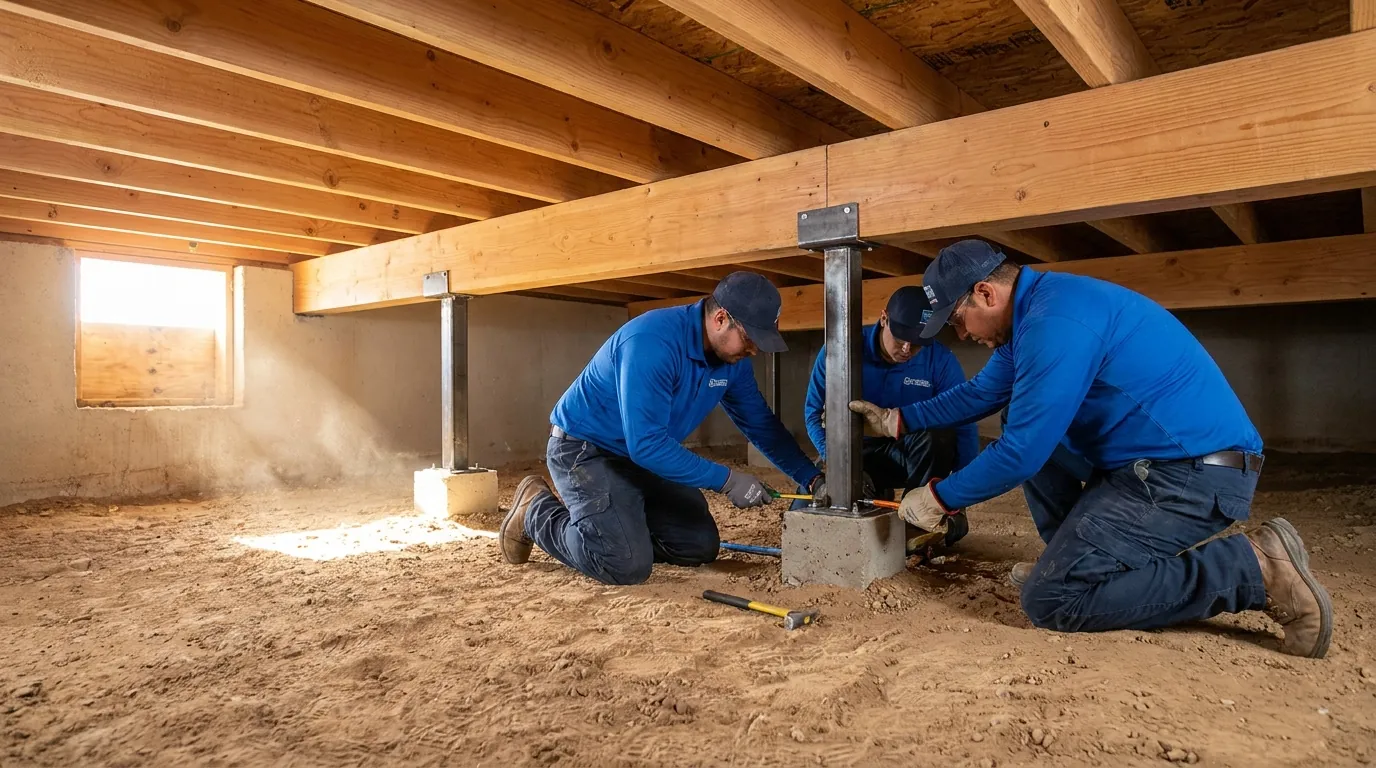
The crawl space is where a raised home carries its weight, through a system of piers, posts, beams, and joists resting on the soil. When those supports weaken, shift, or lose contact with the framing, the floors above lose their footing. Crawl space support restores and reinforces that structure so the home is carried evenly again.
In Rio Rancho, two things commonly undermine a crawl space. The expansive clay soil beneath the piers swells and shrinks with the seasons, nudging supports out of position, and moisture that collects under the home softens the soil and threatens the wood framing. Both trace back to how water moves through our ground.
Strengthening the crawl space means adding or resetting supports, addressing the soil they rest on, and controlling moisture underneath. It works hand in hand with pier and beam leveling, which brings the floor back to level once the supports are sound, and with drainage correction, which keeps water from returning.
Look for these conditions in the crawl space and in the floors above it.
Floors that flex or dip usually mean a post or beam below has settled, shifted, or lost contact with the framing it should carry.
Piers tilting out of plumb, or shims that have dropped out, leave sections of the floor without full support.
Moisture under the home softens the soil supports rest on and speeds decay in wood framing.
Beams and joists that are darkened, soft, or crumbling have lost strength and may need reinforcement.
A persistent musty smell can signal moisture problems in the crawl space that also affect the structure.
Daylight or gaps where a post should meet a beam show that support has been lost at that point.
The work restores solid, evenly distributed support beneath the floor.
We examine every pier, post, beam, and joist, noting failed supports, rot, moisture, and soil conditions underneath.
We measure the floor above to understand where support has been lost and how much the structure has dropped.
New posts or piers are installed and existing ones reset onto stable bearing, then shimmed to carry the beams fully.
Where beams or joists have weakened, we add support so the load is carried without further sag.
We address water and damp soil under the home, often alongside [drainage correction](/services/drainage-correction/), so the supports and framing stay sound.
Under a Rio Rancho home, the soil is not a steady base. Expansive clay swells after monsoon rains and shrinks through the dry season, so the piers set on it rise and fall over time. That movement loosens shims and can lift or drop individual supports, leaving the floor carried unevenly.
Moisture is the second factor. When runoff finds its way under the house, it softens the soil that piers rest on and keeps the wood framing damp. In our climate that water tends to arrive in monsoon bursts and then linger in low crawl-space spots, which is why moisture control is a core part of supporting the structure rather than an afterthought.
Because the crawl space is accessible, support problems here are usually correctable without major disruption. Once the supports are solid, pier and beam leveling can fine-tune the floor, and a foundation inspection is a good way to confirm what your crawl space actually needs.
Tell us what you see under the home and where the floors feel weak. We can help you understand what support and moisture control would put things back on solid footing.
Serving Rio Rancho, Corrales, and surrounding communities.
Two things dominate locally: expansive clay under the piers that swells and shrinks with the seasons, and moisture under the home that softens the soil and decays the wood. Both loosen or shift the supports over time.
They work together but are not identical. Support restores solid, evenly distributed bearing under the floor, while leveling adjusts the shims and supports to bring the floor back to a consistent height once the structure is sound.
Damp soil loses strength, so piers resting on it can settle, and standing water keeps beams and joists wet enough to rot. Controlling that moisture protects both the soil bearing and the framing.
Usually yes. Because the crawl space is accessible from below, adding and resetting supports is done underneath the home, so homeowners can typically stay in the house during the work.